Tai Chi and Qigong Classes in Austin, Texas
A calmer mind and a steadier body, at any age, taught by one of Austin’s most experienced internal arts programs. Rates & Schedule InstantlyAustin Kung Fu & Tai Chi teaches traditional tai chi, qigong and Taoist meditation at 8910 Research Blvd in North Austin. Classes are led by Master Joe Schaefer, who has taught internal martial arts for nearly 40 years, 35 of them in Austin. Complete beginners, seniors and experienced practitioners are all welcome, and your first class is free.
Most people come to us wanting two things: to feel calm again, and to keep moving well for the rest of their lives. Tai chi and qigong deliver both through one simple practice: slow, deliberate movement joined with deep, even breathing.
Twenty minutes into class, your shoulders drop. Your breath slows and deepens. The noise in your head goes quiet, and for the first time all day, your body and mind are moving at the same pace.
What styles of tai chi, qigong and meditation do you teach?
We teach Yang and Chen style tai chi, several traditional qigong systems, and Taoist meditation, along with the related internal arts of Pa Kua and Xing Yi.
Tai chi
Every student starts at the beginning and moves forward at their own pace.
Stage | What you learn |
|---|---|
Foundation | Yang style 24-posture form, the most widely practiced tai chi form in the world |
Developing | Yang straight sword, then the longer Yang family form |
Alongside Yang | Pa Kua (Bagua) circle walking and its animal patterns |
Advanced | Chen style tai chi, including fajing (explosive power) training |
Black Sash and above | Xing Yi, Form of the Mind Fist. Teaches clarifying and streamlining the alignment of the spirit, intent, breath and power. |
Qigong
Qigong (also spelled chi kung) is the practice of coordinating breath, posture and gentle movement to cultivate energy and calm. We teach several systems of Chi Kung and Nei Kung. Qigong is simpler to learn than a tai chi form, which makes it an ideal starting point for anyone with limited mobility.
Taoist meditation
We teach multiple levels of Chi training that start with breath training and develop to small circle of heaven and 8 pathways training. There are many traditional techniques for stilling the mind and directing attention inward. Tai chi is often called “meditation in motion”; these seated and standing methods take that stillness deeper.
Who teaches tai chi and qigong at Austin Kung Fu?
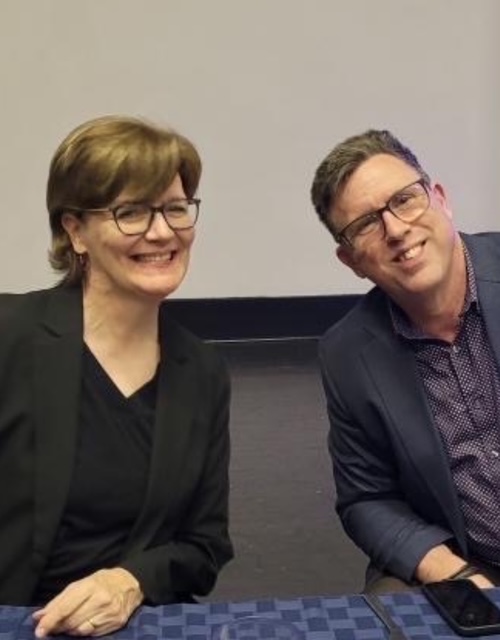
Tai chi and qigong classes are taught by Master Joe Schaefer, who began teaching in 1987 and has taught in Austin since 1991. He co-founded the school with Master Sheryl Schaefer.
Few teachers anywhere bring this combination to class:
- Nearly 40 years of teaching, with 35 years in Austin and thousands of students trained.
- A PhD in neuroscience from the University of Texas at Austin, so he can explain what the practice is doing to your nervous system, not just how to move.
- Performances at the Shaolin Temple in China, on multiple visits.
- A special invited guest performer, twice, at China’s most famous Kung Fu master, Master Zhao Changjun’s school in Xi’an.
Master Sheryl Schaefer holds a master’s degree in physiology and teaches alongside him.
That pairing is the heart of how we teach. You learn the traditional forms exactly as they have been passed down, from a teacher who also understands the science of why they work.
What are the benefits of tai chi and qigong?
Students most often come for less stress, better balance and easier movement, and tai chi and qigong are among the most studied mind-body practices for all three.
How it works
Modern life keeps the body braced and the breath shallow, as if something is always about to go wrong. Tai chi and qigong reverse that pattern. Slow, continuous movement trains balance and coordination, while long, even breaths signal the nervous system that it is safe to settle. Because the movements are gentle, you build strength and flexibility without strain on your joints.
What you will notice
- After your first class: a calmer mind and looser shoulders, often within the hour.
- Within a few weeks: steadier footing, easier movement, and many students say they sleep better.
- Over months and years: better posture and balance, a deeper ability to relax on demand, and a practice you can keep for life.
That last point is the real gift. Tai chi is one of the few forms of exercise you can start at 30 or 75 and keep improving at for decades.
Tai chi and qigong complement medical care; they don’t replace it. If you have a health condition, check with your doctor before starting.
What happens in your first tai chi class?
Your first class is free, needs no experience, and requires nothing but comfortable clothes and flat shoes.
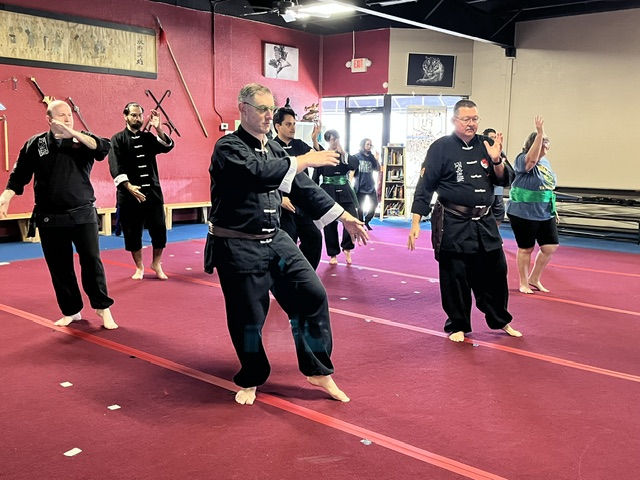
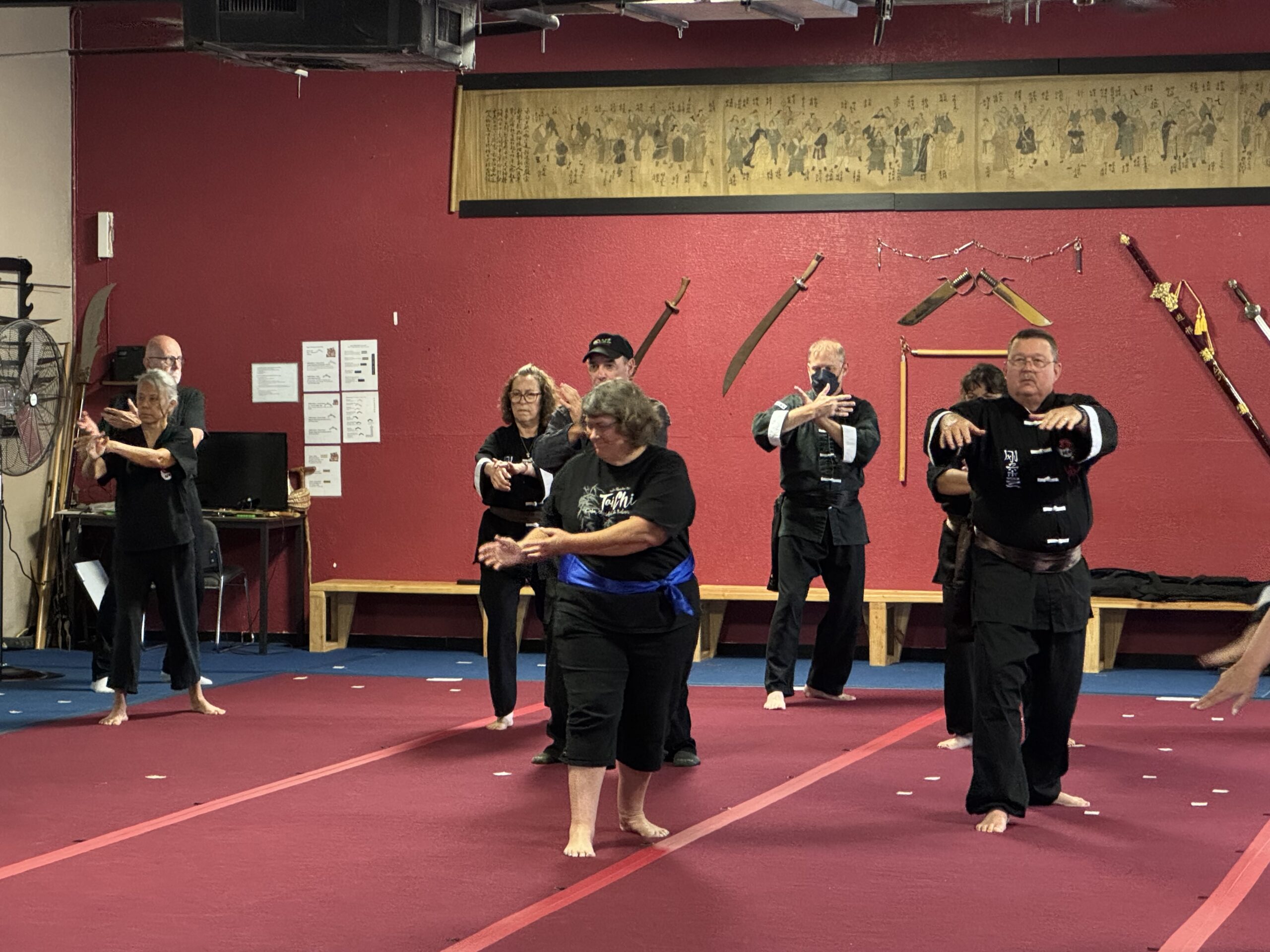
Picture it: you walk into our North Austin studio and an instructor greets you by name. You start with a few minutes of gentle qigong breathing to settle in. Then you learn the opening movements of the Yang 24 form, one step at a time, at your own pace. Nobody is rushed and nobody is watching you struggle; our classes have plenty of instructors, so you get real attention.
You leave calmer than you arrived, knowing your first moves and wanting to come back for the next ones.
Getting started takes three steps
- Book your free class online or call (512) 730-1629.
- Arrive 10 minutes early at 8910 Research Blvd, Suite E-1, Austin, TX 78758.
- Try it. If it’s right for you, choose a plan, with no contracts and discounts for seniors and veterans.

Frequently asked questions about tai chi and qigong in Austin
Where can I take tai chi classes in Austin?
Austin Kung Fu & Tai Chi teaches tai chi and qigong at 8910 Research Blvd, Suite E-1, in North Austin (78758), just off Highway 183. Students come from across Austin, Pflugerville, Round Rock and Cedar Park.
Do I need any experience to start tai chi?
No. Most of our tai chi students start as complete beginners. Everyone begins with the Yang 24-posture form and learns it step by step.
Is tai chi safe for seniors?
Yes. Tai chi is low impact and can be adapted to most fitness levels, which is why it is widely recommended for older adults working on balance. We offer senior discounts, and many of our students are in their 60s, 70s and beyond. Check with your doctor first if you have a health condition.
What is the difference between tai chi and qigong?
Qigong is a broad family of breathing and movement exercises for cultivating energy and calm. Tai chi is a martial art built on those same principles, practiced as a longer, flowing sequence called a form. Qigong is simpler to learn; tai chi adds coordination, memory and martial depth.
Which style of tai chi is best for beginners?
Yang style is the most popular starting point, and its 24-posture form is the most widely practiced tai chi form in the world. Its movements are slow, even and easy to follow. We introduce Chen style later, once your foundation is solid.
How long does it take to learn tai chi?
Most beginners learn the full Yang 24 form in about [X months] of regular practice. You will feel the benefits long before you finish it, often after the first class.
Do you teach qigong and meditation on their own?
[Confirm: whether qigong and Taoist meditation run as separate classes, or are part of every tai chi class.]
Is tai chi a real martial art?
Yes. Tai chi is an internal martial art, and we teach it as one, preserving its traditional forms, weapons and applications. You can practice purely for health, or go deeper into the martial side.
How much do tai chi classes cost?
Your first class is free. After that, we offer affordable plans with no contracts, plus discounts for seniors and veterans. See our [Rates and Schedules page] for current pricing.
When are tai chi classes held?
We hold classes on weekdays and weekends at several times. See our [Rates and Schedules page] for the current schedule.
What should I wear to tai chi class?
Comfortable clothes you can move in and flat, flexible shoes. No uniform is needed to start.
Who is Master Joe Schaefer?
Master Joe Schaefer is the 9th degree black belt co-founder and head instructor of Austin Kung Fu & Tai Chi. He has taught internal martial arts since 1987, holds a PhD in neuroscience from the University of Texas at Austin, has performed at the Shaolin Temple multiple times, and was twice a special invited guest performer at Master Zhao Changjun’s school in Xi’an, China.